What is the ICF System?
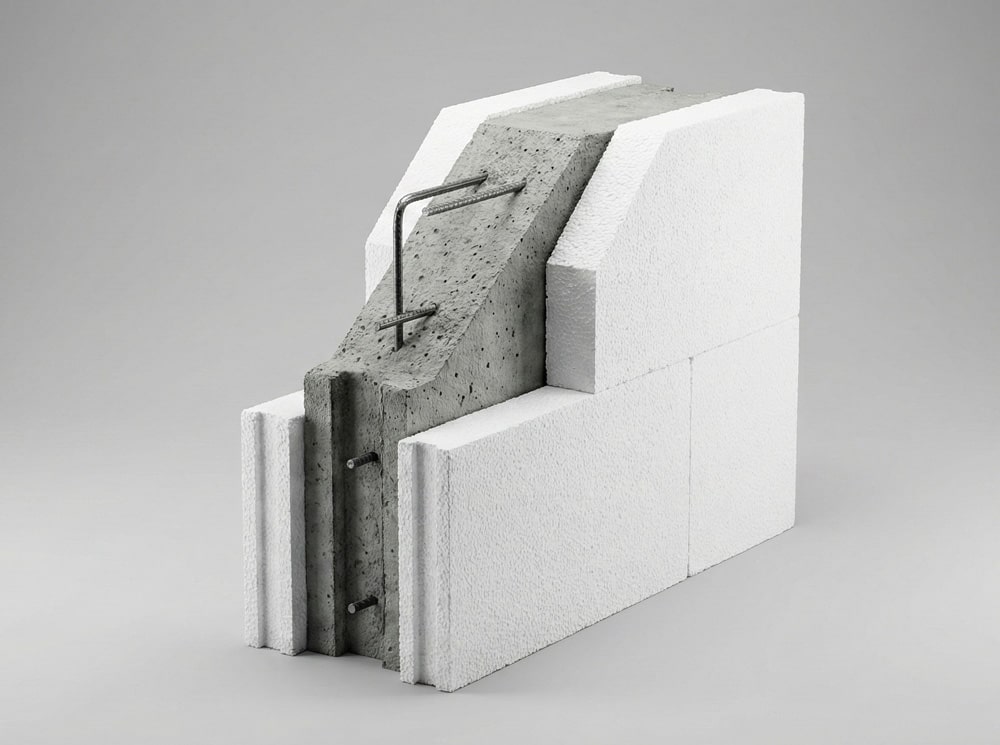
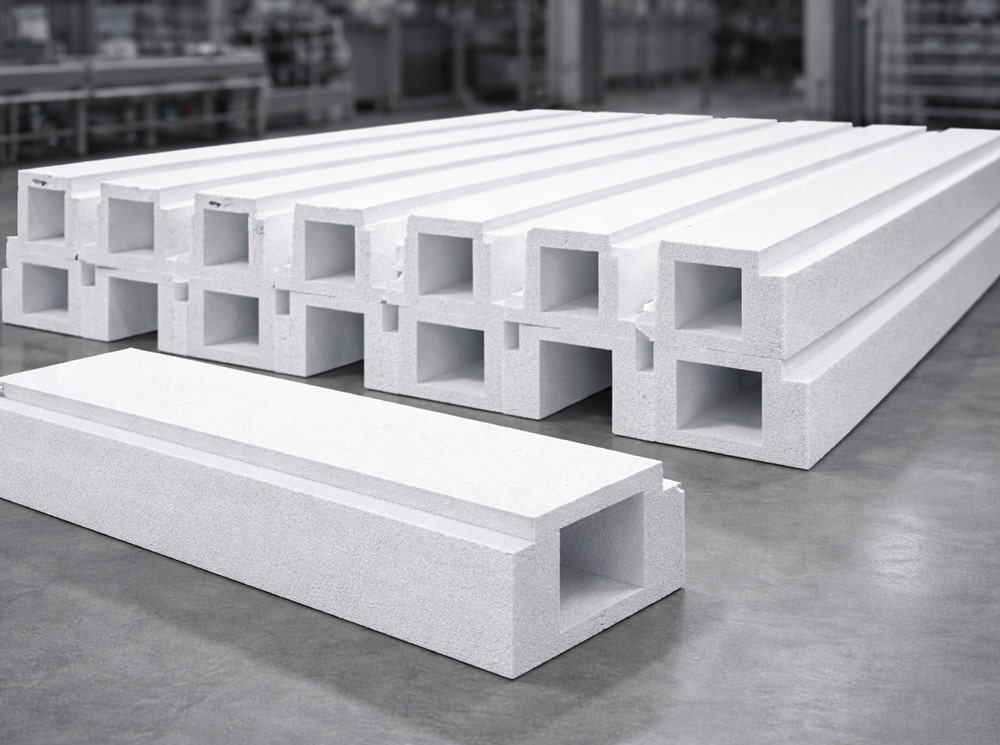
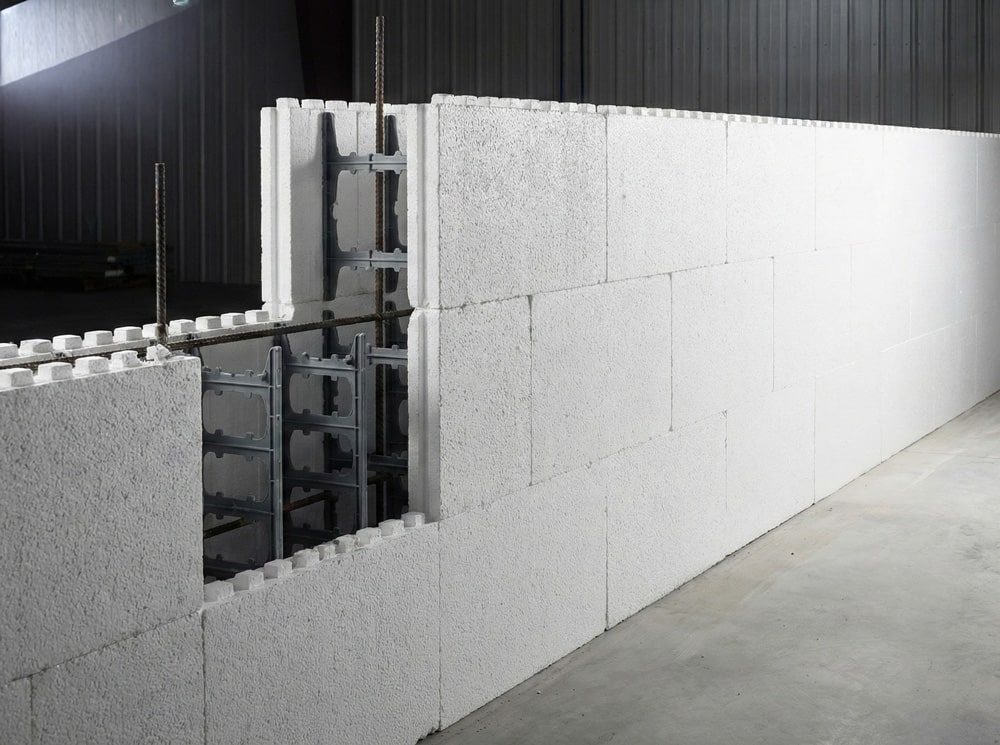
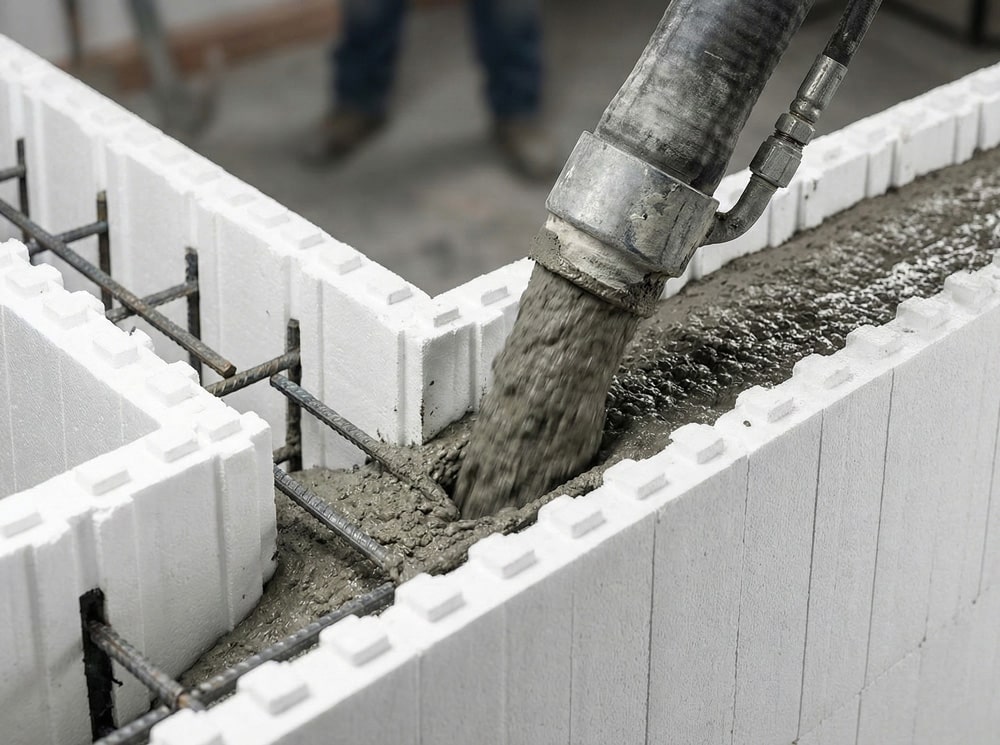
The ICF system consists of interlocking EPS blocks or panels that are assembled on-site to form wall molds. Reinforcement bars are placed inside the forms, and concrete is poured into the cavity, creating a reinforced concrete core that remains permanently insulated on both sides.
Unlike traditional formwork systems that are removed after concrete curing, ICF forms remain in place as part of the wall assembly. This approach simplifies construction, reduces material waste, and ensures consistent insulation performance throughout the building envelope.
Structural and Performance Benefits
ICF walls provide high structural strength due to their reinforced concrete core while maintaining low overall wall weight compared to masonry systems. The continuous insulation layers on both sides of the wall significantly reduce thermal bridging, leading to improved energy efficiency and indoor comfort.
From a structural perspective, ICF systems perform well under seismic loads due to their monolithic concrete core and reduced dead load. They also offer enhanced resistance to fire, sound transmission, and environmental factors when finished with appropriate protective layers.
Applications in Modern Construction
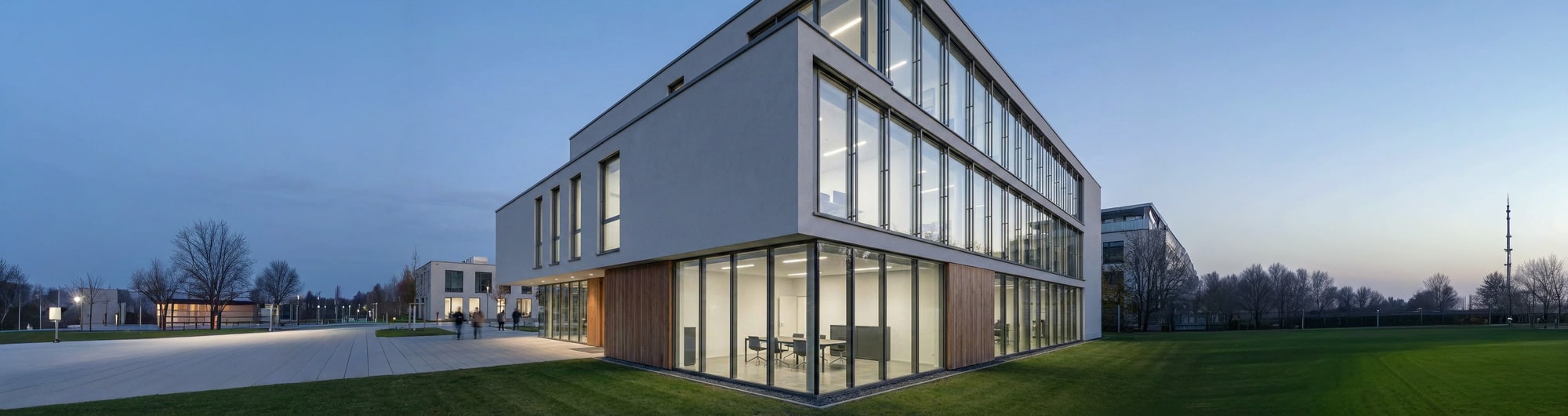
ICF systems are widely used in residential, commercial, and industrial buildings, particularly in projects that require energy efficiency, fast execution, and high structural reliability. They are suitable for load-bearing walls, basement walls, and multi-story construction within applicable design limits.
The integration of structure and insulation in a single system reduces construction time and coordination complexity. As a result, ICF has become a preferred solution in modern construction projects that prioritize performance, durability, and long-term efficiency.